Last Dance Orange Roughy
LARGE SCALE 3D PROJECTION WITH SURROUND SOUND
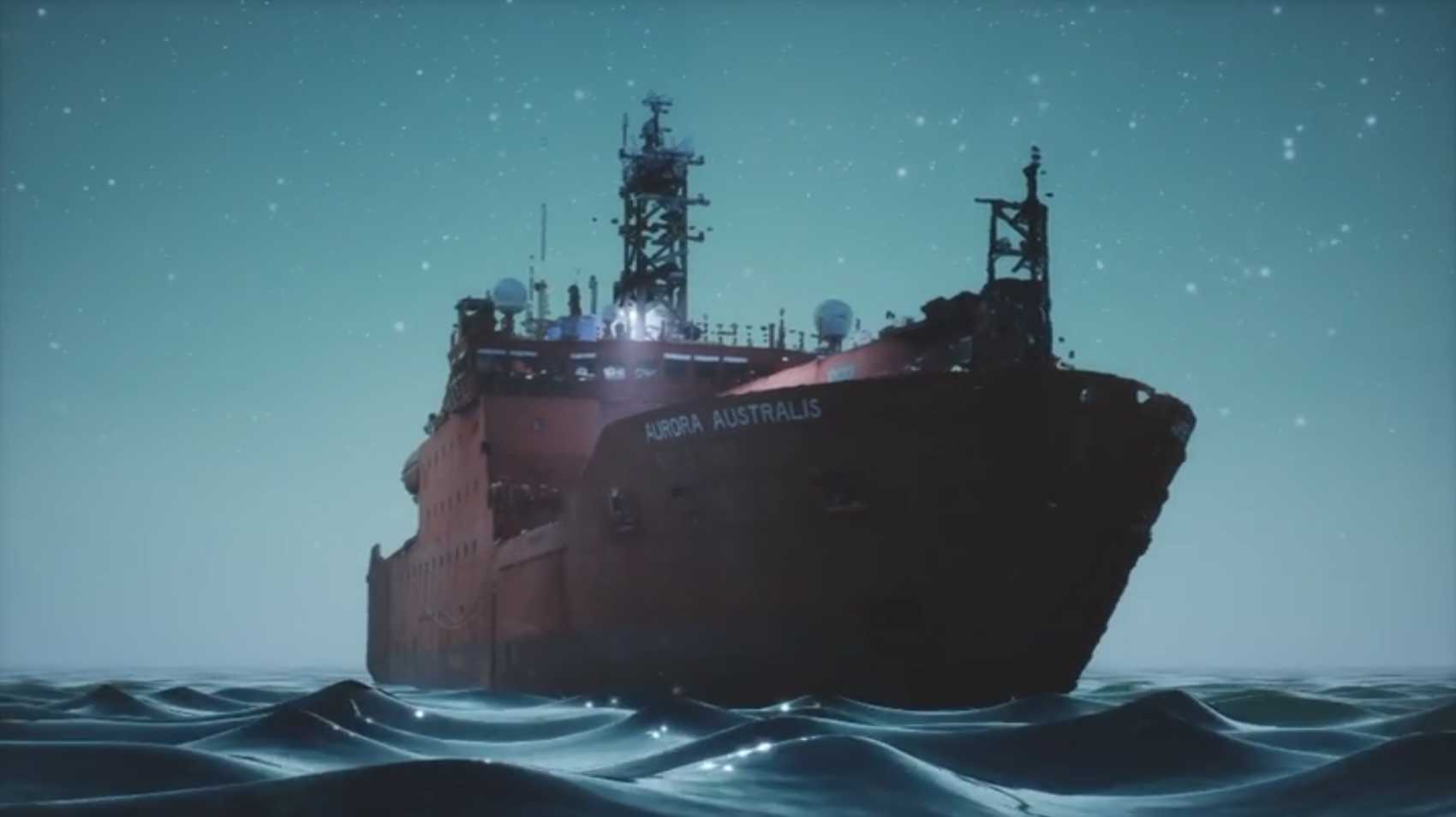
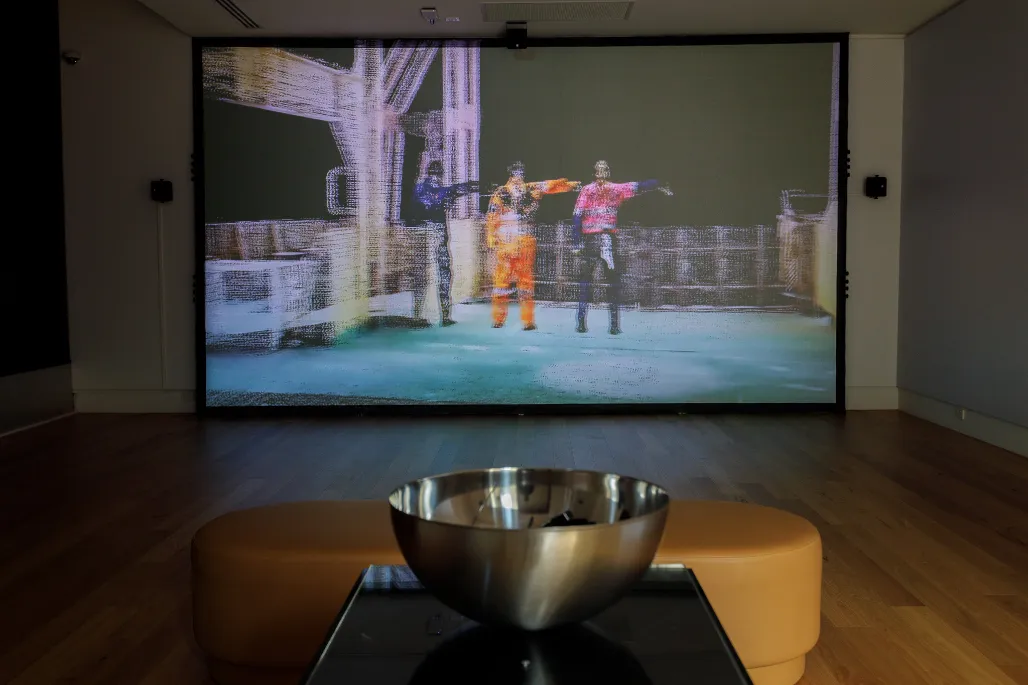
Last Dance Orange Roughy is an immersive, large screen 3D stereo projection with multi-channel ambisonic audio. A room-sized multiple-person immersive VR experience portraying the visceral experience of the final Antarctic voyage of the icebreaker RSV Aurora Australis (affectionately know as the "Orange Roughy"), its crew, expeditioners and scientists.
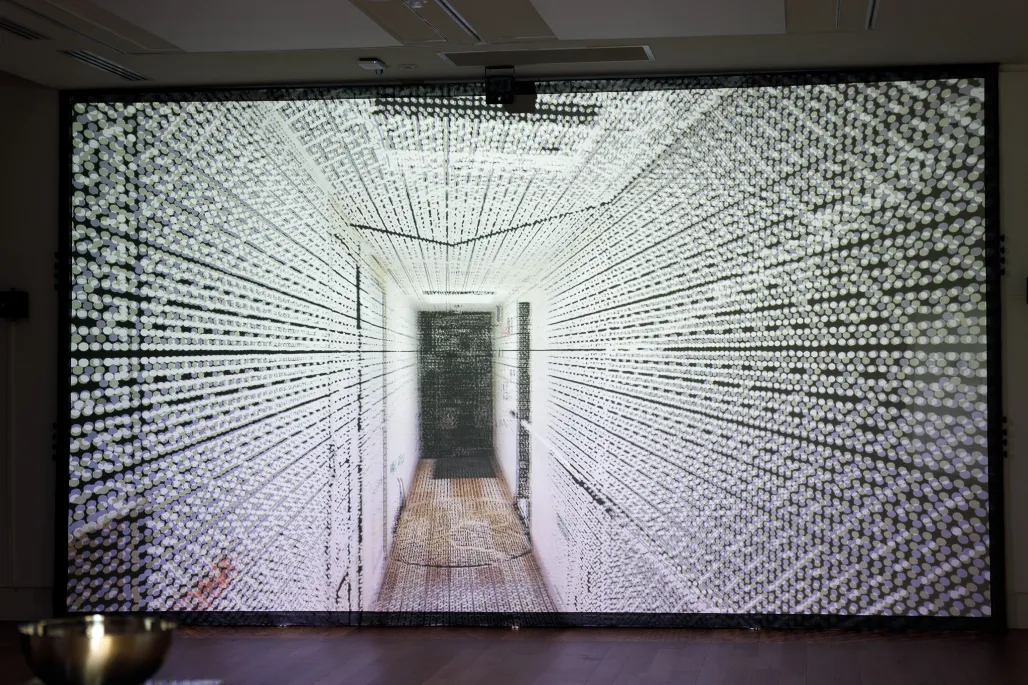
Using lidar scanning, ambisonic audio recording, drone videography, video and photogrammetry, we scanned the entire ship and many crew members, scientists and expeditioners. We also scanned, video and audio recorded parts of Mawson base and surrounding areas of the Antarctic continent and some remote cabins 'on the ice'.
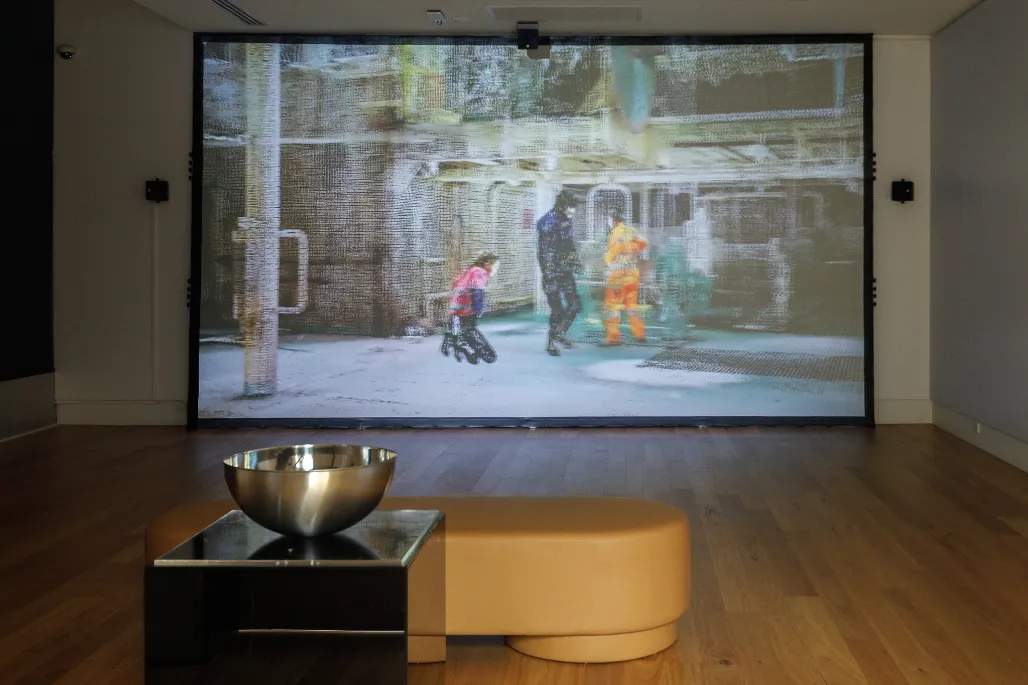
For Last Dance Orange Roughy, we applied motion captured dance routines, captured in our studio, to the body scans of crew members and expeditioners and placed them in situ in various locations about the ship.
The work explores the choreography of the intricate and intimate daily life and routines of those on the icebreaker RSV Aurora Australis on its final voyage to and from Antarctica to supply Australian bases. Life and work aboard the ship is intense and potentially dangerous, carried out in extreme conditions and requiring highly specialised training and experience. We wanted to try capture the intensity of the sound and colour of this life on the wild ocean as well as the monstrous irony of burning half a million litres of diesel fuel in order to carry a million litres of diesel fuel to run generators on a putative pristine wilderness.
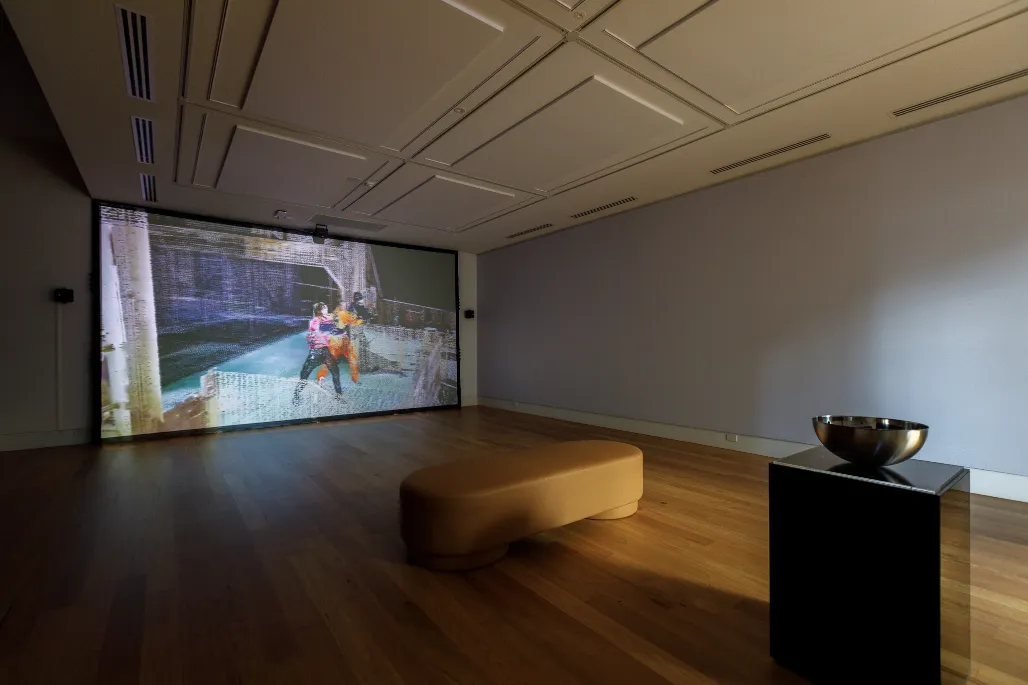
Excerpt from a review by David Wlazlo for Memo Magazine:
Away across the foyer, in what looks like a purpose-built screening room (but far away enough to not obviously be part of the gallery), is the final work in the show: John McCormick and Adam Nash’s Last Dance Orange Roughy (2022). The video is an immersive and technological representation of the last voyage to Antarctica of the ice-breaker RSV Aurora Australis. The artists were present on this final voyage and recorded the ship and the crew via lasers and photogrammetry scans. Combined, these form a digital 3D model. Entering the room you therefore must also pick up some 3D glasses. The large projected video shows a semi-transparent digital representation of the ship in motion. The walls and stairs are transparent planes of dots or datapoints, and occasionally figures appear, either to dance in unison or conduct some kind of business-as-usual activity aboard the vessel. The camera circles and flies through the ship, and the deck becomes a dancefloor. In other moments, the swaying figures of intensely populated data points (the crew members) appear to run haphazardly through the corridors or sway side to side. There’s a subtle distinction between dancing and simply moving with the ship, and on occasion figures fall through the floor or seem to stand below it. I really enjoyed this work: the 3D effects weren’t overdone, the representation of space through the dots of data was visually engaging, and the narratives blended the poetic dancers with the ship workers effortlessly. Perhaps this is an antidote to my ballerina-phobia: a kind of tech-bro ballet, one that tries to look forward into mediated dance while at the same time honouring a period of scientific research.
EXHIBITED:
- Beyond The Ballerina. Wyndham Art Gallery. Werribee, Victoria, Australia. 2025. Open every day until 21 December.
- Antarctic Festival/Winter Light Festival. Salamanca Arts Centre, Hobart, Tasmania 2022.
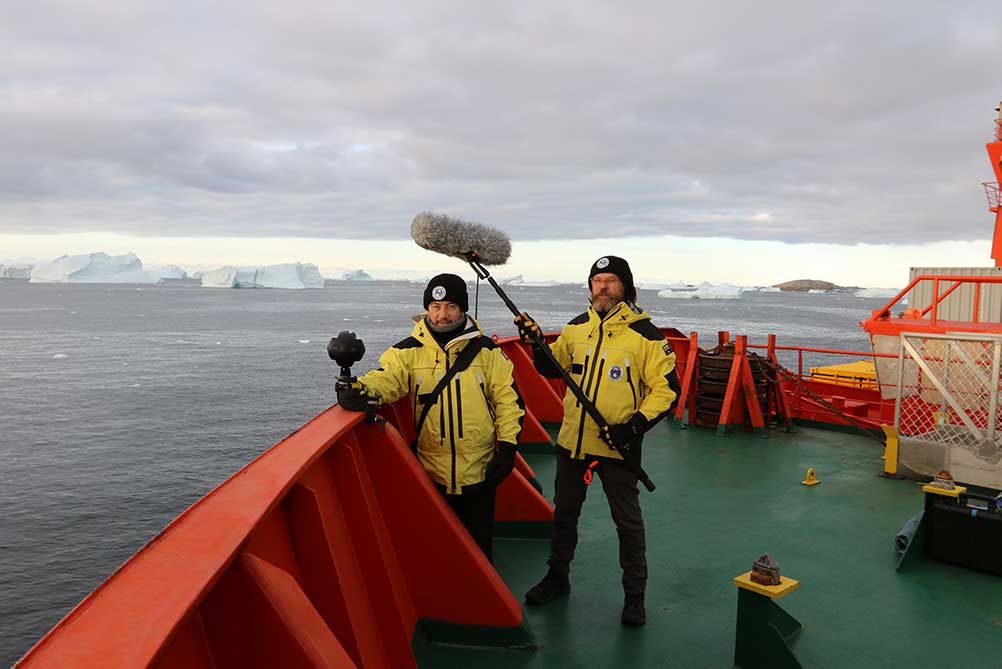
John McCormick and Adam Nash - aka Wild System - were the 2019/20 Australian Antarctic Arts Fellows with the Australian Antarctic Division. We sailed on the final Antarctic voyage of the icebreaker RSV Aurora Australis, collecting data from the ship, the voyage, the scientists, expeditioners and the crew for the entire six week voyage. We used lidar scanning, photogrammetry, drone videography, and ambisonic audio recording, among other methods to capture the energy and activity of the voyage. We also spent time on Mawson and Casey stations in Antarctica, experiencing the icy continent and station life first hand. We collected massive amounts of data and modulated them into various artistic outputs.

This project has been assisted by the Australian Government, through the Department of Agriculture, Water and the Environment, Australian Antarctic Division. Antarctic Arts Program: Sachie Yasuda, Tiffany Brooks.
This project has also been assisted by ANAT, the Australian Network for Art and Technology, RMIT University, and Swinburne University.
Adam and John would like to extend their thanks to all the crew and expeditioners aboard the final voyage of the RSV Aurora Australis to the Antarctic Continent.